
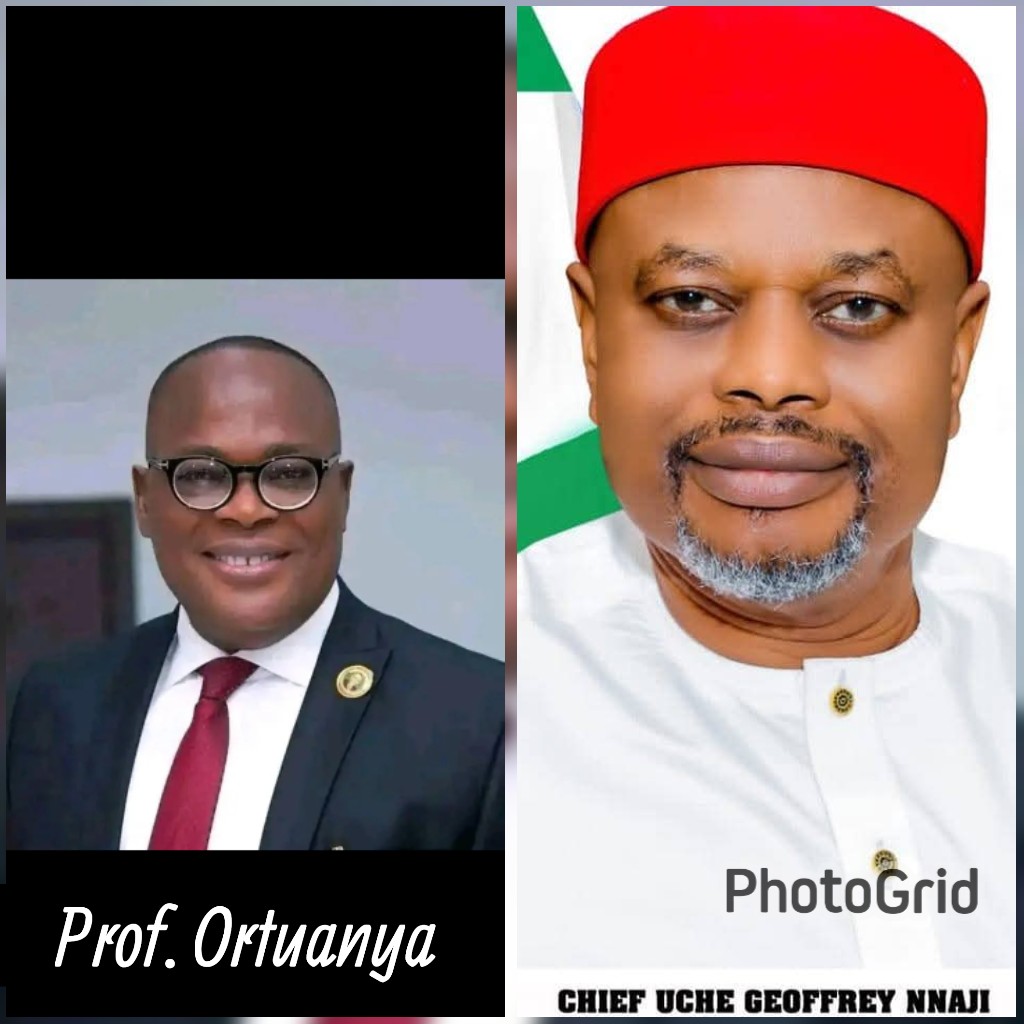
The former Minister of Science, Technology, and Innovation, Chief Uche Nnaji did the unthinkable by resigning his ministerial position over the allegations of certificate forgery linked to his name. His resignation was not an admission of guilt as all indications point to an ochestrated campaign to rubbish the image of a reputable public officer in the greedy quest for political gais. As the controversy rages on, it is becoming clear that the entire episode was political desperation disguised as academic inquiry.
Surprisingly as Chief Nnaji moves to the court to clear his name, the chief antagonist in the matter, Professor Simon Ortuanya, the Vice Chancellor of University of Nigeria, Nsukka UNN rather than come forward to defend his earlier allegations is now singing a different song. According to his defense counsel, internal remedies at UNN had not been exhausted.
However, the search for the truth continues as the Minister of Education’s has set up a panel of inquiry to investigate the matter. But why a panel of enquiry instead of prosecution? Sceptics query. Could it be case of institutional bureaucracy and contradictions following the release of two conflicting letters – one confirming the certificate in 2023 and another denying it in 2025. The scenario raises serious questions about the authenticity of academic records and the credibility of our institutions.
The Minister of Education explains that the panel was necessary due to the conflicting information. However, this does not explain why Chief Uche Nnaji was not prosecuted for certificate forgery. Was no offense actually committed, or was he framed up?
The minister explained that the pressure was overwhelming, and the situation deteriorated further when Chief Nnaji took the matter to court. “Once the issue entered the judicial arena, we had to tread carefully,” he noted. “The Ministry could not act on hearsay or politically charged claims. We needed structured, fact-based clarity.”
His first step was to involve the Public Complaints Bureau, which then issued a letter to the university in question requesting confirmation of the certificate. This detail aligned with one of the documents earlier reported in Premium Times.
However, the twist came when the Public Complaints Bureau (PCB) later stated that it never issued such a letter. In other words, a document circulating in public purportedly to be the request latter from the PCB to UNN to authenticate the former minister’s certificate has been disowned by PCB.
This contradiction, coupled with other conflicting documents from various quarters, was the basis for the ministry’s decision to establish a formal panel of inquiry.
The role of the Vice-Chancellor of UNN, Professor Simon Ortuanya, is also under scrutiny. Why did he choose to meddle in matters of academic records, which is the purview of the Registrar? Was he acting with a hidden agenda? The fact that the information he released contradicted the information given by the Registrar in 2023 only adds to the confusion.
Also at the heart of the matter are UNN’s conflicting letters, a clear case of institutional inconsistency In 2023, a letter allegedly signed by the university’s Registrar reportedly confirmed the authenticity of Nnaji’s certificate.
In 2025, UNN, this time through a letter signed by the newly appointed Vice-Chancellor, Prof Ortuanya barely two months into office, issued a denial.
This sudden reversal has raised pressing questions:
Why did the Vice-Chancellor, rather than the Registrar, respond? What changed between 2023 and 2025? How could two official communications from the same university contradict each other on such a sensitive matter?
This pattern does not only raise institutional concerns, it poses a national threat to every graduate who relies on Nigerian institutions for the integrity of their academic credentials
Thus setting up a panel of inquiry by the Minister of Education is a step in the right direction, but it raises questions about the timing. With the controversy already before the courts, is it not pertinent for Professor Simon Ortuanya to resign as Vice-Chancellor of UNN to allow the panel do a thorough job? Indeed, if Prof Ortuanya has any inkling of honour to his name, he should follow the excellent example of Chief Nnaji by resigning his appointment so that the panel of inquiry can do their job without fear or favour
The implications of this controversy – which in future will be better known as the ‘Ortuanya Misadventure’ is institutional rather than personal, it’s a fight to safeguard the credibility of every Nigerian certificate. The episode highlights the vulnerability of every graduate who relies on Nigerian institutions for the integrity of their academic credentials. If a university can disown it’s own certificate for political gain who protects ordinary graduates? The answer lies in establishing a reliable, independent, and secure national system for certificate authentication.
A student can gain admission legitimately, attend classes, graduate properly and still be accused of holding a fake certificate, simply because an official somewhere claims otherwise. If an institution contradicts itself, how does an ordinary citizen prove the truth? Nigeria does not have a tamper-proof, third-party digital repository where universities can log and verify certificates independently of individuals or changing officers. As long as verification depends on letters written by different administrators, each capable of mistakes, biases, power plays, political pressure, or internal conflicts, no graduate is fully protected
One recalls the National Youth Service Corps (NYSC) controversy involving Enugu State Governor Peter Mbah. The NYSC Director-General’s claim that the governor’s discharge certificate was not issued by their institution sparked a heated national debate. This parallels the present controversy, where the issue is not whether the former minister graduated, but whether the certificate he holds was actually issued by UNN
While the setting up of a panel of inquiry is a necessary step, but it’s just the beginning. Nigeria needs to take urgent action to protect its educational integrity. We need a system that cannot be altered by a Vice-Chancellor, Registrar, or agency director acting out a personal script rather than adhering strictly to due process and institutional practice.
Until the system evolves to the extent that every certificate is verifiable, permanently and transparently. Until then, every graduate from the polytechnic to the university – Federal or State – remains vulnerable.
While the current panel of inquiry focuses on one man and one certificate, the deeper story is about the systemic vulnerability facing millions of Nigerians. The Minister’s decision to set up a panel may appear cautious, but it is practical in view of
contradictory documents from credible institutions, plus claims and counterclaims from multiple parties. Given these complexities, rushing into prosecution without certified facts would be irresponsible and legally disastrous.
The task before panel is clear: To determine what is true, what was forged, what was manipulated, and what needs reform.
But even beyond this investigation, Nigerians deserve something more fundamental: a reliable, independent, secure national system for certificate authentication.
The panel of inquiry may appear slow compared to the public’s appetite for prosecution, but this investigation has exposed something far bigger than one political figure, it exposes a national crisis of documentation, institutional credibility, and the security of academic records. If a reputable public institutions like the UNN can contradict itself in writing, then no Nigerian’s certificate is truly safe. The ongoing probe is therefore a test of Nigeria’s capacity to protect its educational integrity.