
By Chinedu Okpalanma
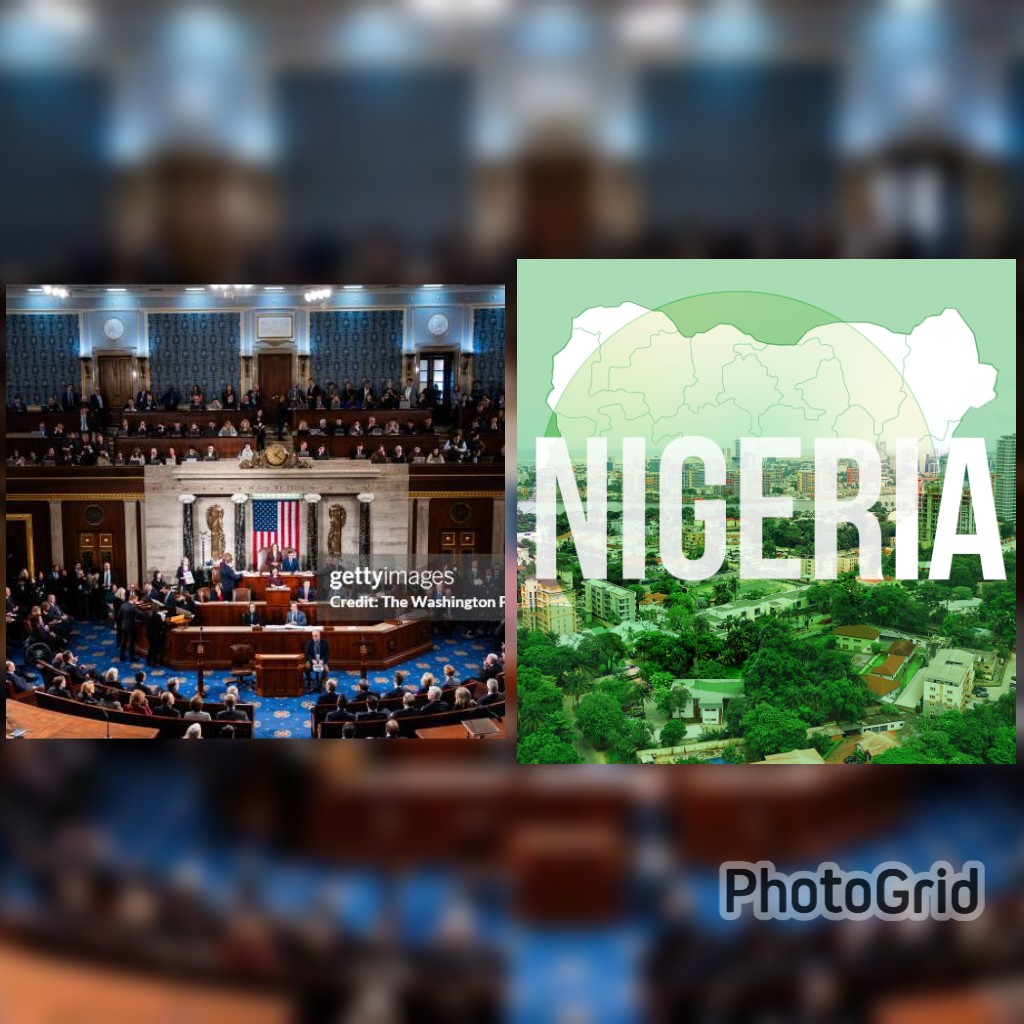
ABUJA — I watched the recent U.S. congressional hearing on the killings and violent targeting of Christians in Nigeria. As I listened to the testimonies and questions from U.S. legislators, one thought haunted me: Why isn’t this happening in Abuja? Why is another country’s Congress giving more attention to Nigerian lives than the Nigerian National Assembly, whose members were elected to represent us?
That contrast, for me, captures the mockery our democracy has become.
The U.S. hearing was everything a democratic process should be. Lawmakers invited experts, challenged official narratives, debated policy options, and pushed for accountability. Whether or not one agrees with every argument raised, the process itself showed seriousness as elected officials were fighting to understand a problem and determine how power should respond.
Now look at our own National Assembly.
The same institution that should investigate our security failures, question the President’s strategy, invite victims to testify, demand answers, audit budgetary expenditure on security, and probe unresolved massacres are instead silent. Issues that deserve national debate die quietly because most of our lawmakers are more interested in pleasing the executive than scrutinising it.
If democracy is supposed to be inquisitive and accountable, ours is timid and transactional.
It is a painful irony: foreign legislators feel compelled to examine Nigerian security failures while our own legislators act like spectators.
This is not about America “helping” Nigeria. It is about the moral indictment of watching outsiders take seriously what our own elected officials treat casually. Yes, Americans can hold hearings about our crisis, but Nigerians should be leading them. Unfortunately, that requires a legislature that sees itself as a guardian of the peoples welfare, not an extension of the villa.
The failures of our legislature are not mysterious. They are deliberate and I can boldly summarise them in 3 parts:
- Oversight is an inconvenience – Proper legislative oversight requires courage: the courage to risk offending the executive, losing patronage, or complicating one’s re-election. Too many of our lawmakers are unwilling to take that risk.
You see it in the rushed approvals of loans.
You see it in the rubber-stamping of budgets with minimal scrutiny.
You see it in the unwillingness to publicly interrogate military strategy, even as communities are wiped out.
Lawmakers who should be watchdogs have become eager participants in whatever the executive wants.
- “Constituency projects” is a gold mine – The idea of constituency projects was noble at first, but the practice has become one of the biggest pipelines of corruption in the country.
Inflated contracts.
Ghost projects.
Funds diverted through friendly contractors.
Zero transparency.
Instead of focusing on lawmaking and oversight, many lawmakers now focus on securing contracts and negotiating slices of the budget. Constituency projects have become a political ATM, not a development tool.
- National assembly is for settlement, not service – This is the harsh truth many Nigerians already know, that majority of our lawmakers see the National Assembly as a reward, not a responsibility.
A place to “cash out.”
A place to recover election expenses.
A place to gain immunity through influence.
A place to join the inner circle of national patronage.
When legislative seats are seen as political compensation, what you get is not representation but self-interest.
And self-interest never asks hard questions.
Whenever you see the U.S. Congress, European Parliament, or international human-rights groups discussing Nigeria more seriously than the Nigerian government does, it means we have vacated our own responsibility. Those conversations abroad only become necessary because the silence at home is deafening.
I do not blame the U.S. for holding that hearing. I blame Nigeria for making it necessary.
A National Assembly that seeks to regain public respect and play the role the constitution envisioned, must:
· Treat oversight as a sacred duty, not a political risk.
· Allow public, transparent investigations into security failures.
· Clean up and reform the constituency project system.
· Strengthen committees with real research and auditing power.
· Elect leaders who owe their loyalty to the public, not the presidency.
Most importantly, they must cultivate the courage to ask uncomfortable questions, because democracy dies when legislators become timid.
Nigeria does not need foreign oversight. Nigeria needs a National Assembly that remembers its job: to serve, to question, to challenge, to protect.
Until our lawmakers stop treating their positions as settlement packages, we will keep outsourcing our national conversations to foreign capitals and our democracy.