
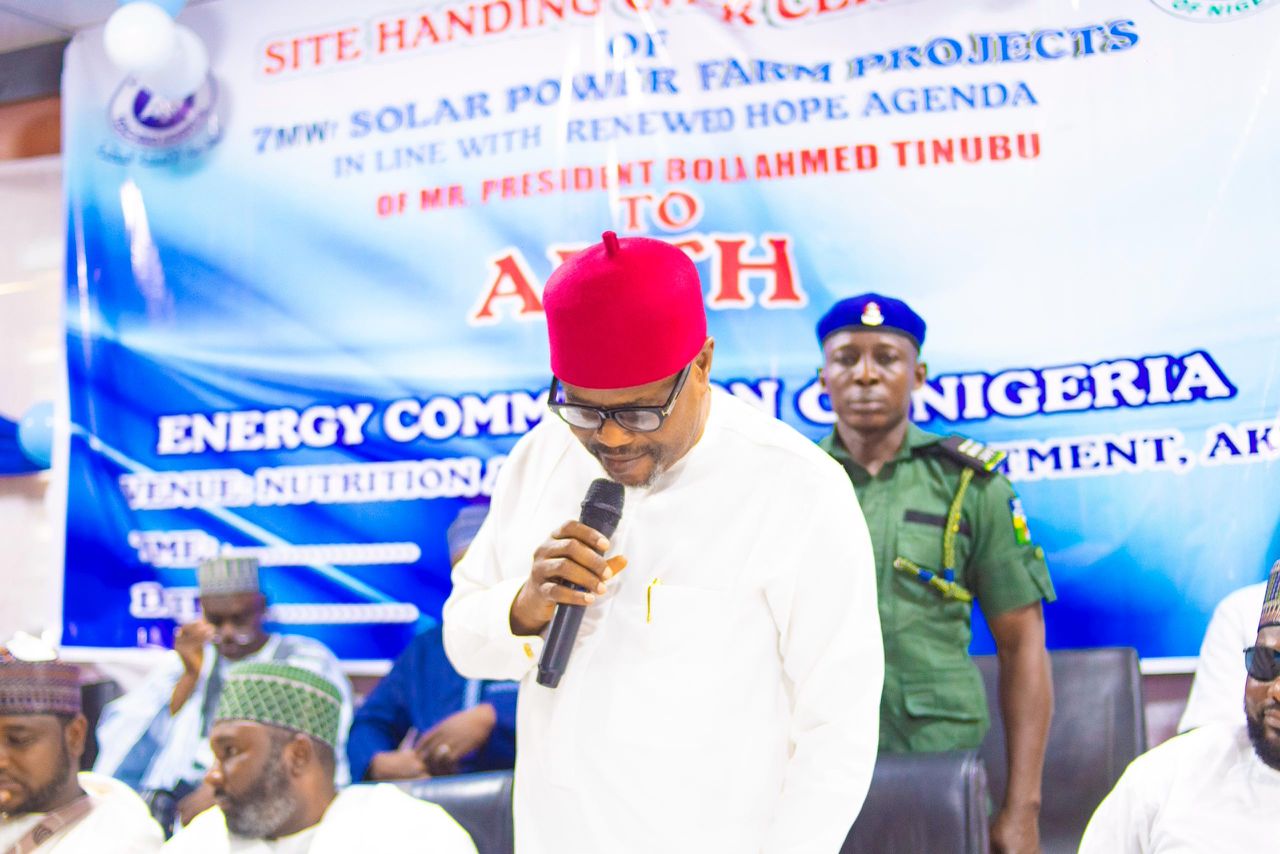
Nigeria has taken a bold step toward energy security and climate resilience with the launch of a 7-megawatt solar power project at Aminu Kano Teaching Hospital (AKTH), the first pilot of President Bola Ahmed Tinubu’s Renewed Hope Solarization Project.
The initiative, formally inaugurated by the Honourable Minister of Innovation, Science and Technology, Chief Uche Geoffrey Nnaji, is designed to permanently take AKTH off the fragile national grid, guaranteeing uninterrupted electricity supply for its more than 700 beds, critical life-support equipment, and thousands of staff and patients.
“This is not just about solar panels. It is about saving lives, cutting costs, and laying the foundation for Nigeria’s clean energy future,” Chief Nnaji declared at the groundbreaking, underscoring the urgency of the project after recent power outages at AKTH led to tragic loss of lives in the Intensive Care Unit.
A Presidential Priority
The project is part of President Tinubu’s Renewed Hope Agenda, which recognizes reliable electricity as central to national development. Each of Nigeria’s 36 states and the Federal Capital Territory will host a solar farm and high-capacity battery storage system under this initiative, enough to power one Federal University and at least one University Teaching Hospital in each location.
At present, most of these institutions face crippling monthly electricity bills of ₦150–₦200 million while depending heavily on diesel generators — an unsustainable burden that drains public finances and threatens health outcomes.
“When the agony and cries of these institutions reached the President, he demanded a solution. Today, that solution is here in Kano,” the Minister affirmed.
Collaboration Across Government
The success of the Kano pilot rests on a partnership across all tiers of government:
President Bola Ahmed Tinubu provided the political mandate and urgency for the initiative.
Chief Uche Geoffrey Nnaji, Honourable Minister of Innovation, Science and Technology, drove the project’s strategic vision and inter-agency coordination.
Hon. Abubakar Kabir Bichi, Chairman of the House of Representatives Committee on Appropriation, championed the funding allocation and attracted the pilot project to Kano State.
The Energy Commission of Nigeria (ECN), under Director-General Dr. Mustapha Abdullahi, serves as the implementing agency, conducting the energy audit and managing execution.
Life-Saving Impact.
In Nigerian hospitals, electricity is not a luxury; it is a lifeline. When the power fails:
Ventilators and oxygen machines in Intensive Care Units shut down.
Operating theaters fall into darkness mid-surgery.
Cold storage for vaccines and blood banks is compromised.
Dialysis and incubators for vulnerable patients cease to function.
By guaranteeing uninterrupted power, the AKTH solar project directly prevents such tragedies, restores confidence in the health system, and demonstrates how clean energy can translate into immediate human impact.
Toward Nigeria’s Energy Transition
With a connected load of 3.9 MW and an unsustainable diesel bill of ₦31.6 million monthly, AKTH epitomizes the challenge facing Nigerian institutions. The new decentralized, intelligent 7MW solar mini-grid offers a replicable model that will cut costs, eliminate dependence on diesel, and accelerate Nigeria’s Energy Transition Plan (ETP).
The Ministry confirmed that the system will include SCADA-based smart monitoring, training for local staff, and a sustainability framework to ensure long-term reliability.
A National Model
The AKTH project is more than a hospital upgrade. It is a national model for clean energy transition:
Reducing reliance on fossil fuels.
Cutting emissions while protecting health.
Demonstrating government’s commitment to climate-smart infrastructure.
Setting a precedent for future institutional solarization across Nigeria.
Looking Ahead
Chief Nnaji emphasized that this initiative represents the beginning of a nationwide rollout:
“From Kano, we will move state by state until every federal university and teaching hospital in Nigeria can stand independent of the grid, powered by clean and reliable energy. The cost of inaction is measured in lives lost. This project is about hope restored.”
About FMIST
The Federal Ministry of Innovation, Science and Technology leads Nigeria’s efforts in science, technology, and innovation-driven development. Through the Renewed Hope Solarization Project, FMIST is advancing energy security, healthcare resilience, and Nigeria’s clean energy transition.
Contact us: Robert.Ngwu@scienceandtech.gov.ng